
Call Us: 1.800.275.3453
Request a Quote
Call Us: 1.800.275.3453
Request a Quote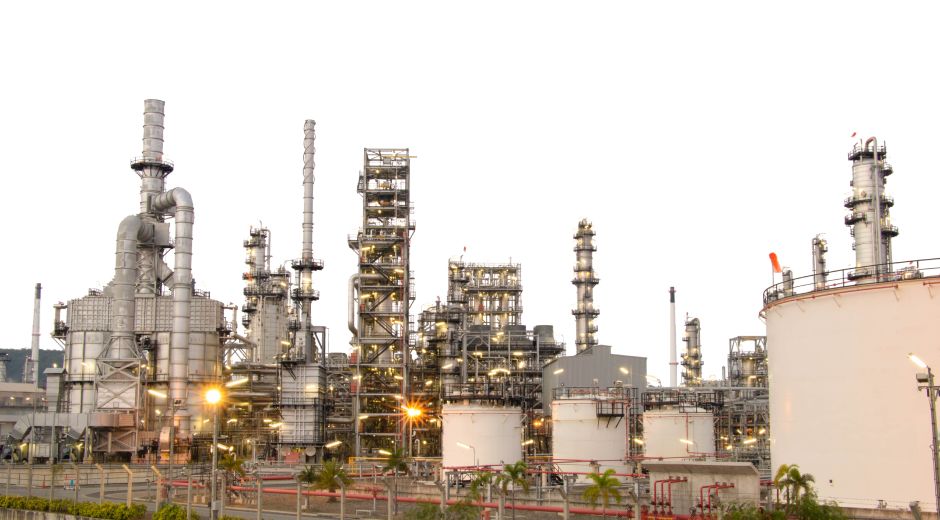
A single transformer failure can release thousands of gallons of dielectric oil into the surrounding environment. When that happens, the consequences are immediate: contaminated soil, polluted waterways, regulatory penalties, and extended operational downtime. For facilities that rely on oil-filled transformers, effective transformer spill containment is not optional. It is a core operational requirement that protects personnel, the environment, and your bottom line.
This guide covers the containment systems, products, compliance standards, and best practices you need to manage transformer oil safely and prevent costly spills at your facility.
Oil-filled transformers are used across the electric utility, manufacturing, petroleum, and chemical industries to regulate voltage and distribute power. These units rely on mineral oil or synthetic fluids to insulate windings and dissipate heat. Some large power transformers contain upwards of 30,000 gallons of oil, making a potential leak or catastrophic failure a serious environmental and financial liability.
Without proper transformer oil containment, a spill can seep into soil, contaminate groundwater, and reach nearby waterways. Cleanup costs escalate quickly, and the environmental damage can take years to remediate. Beyond the direct impact, facilities face enforcement actions from the EPA, including civil penalties that can reach tens of thousands of dollars per day per violation.
The good news is that well-designed containment systems neutralize these risks before they escalate. A proactive approach to transformer containment protects your facility from regulatory exposure and prepares you for both minor drips and worst-case discharge scenarios.
Transformer oil containment systems operate on two levels, each serving a distinct function in your overall spill prevention strategy.
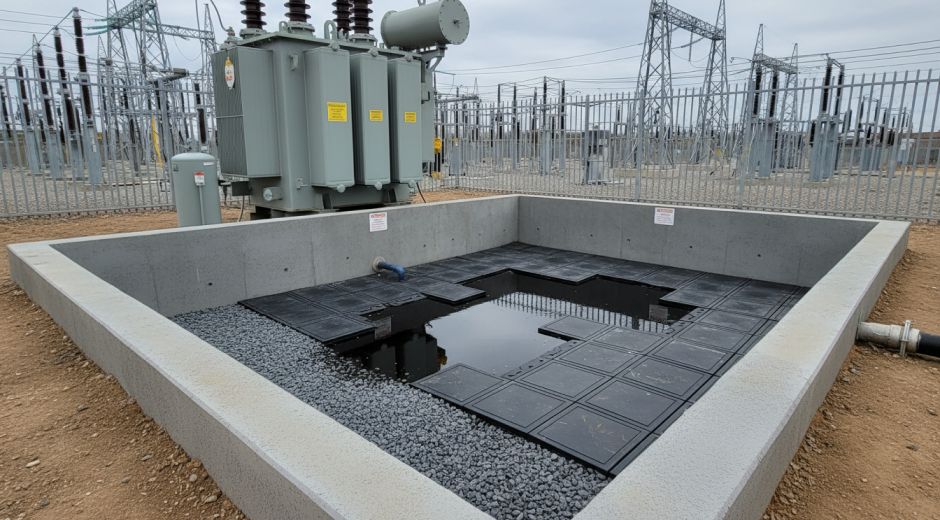
Primary containment is the first line of defense. These systems sit directly beneath or around the transformer to capture oil from routine drips, minor leaks, or maintenance activities. Common primary containment products include drip trays, containment pads, and built-in basins. Polystar’s Containment Pad is a fiberglass-encapsulated steel pad that provides a crack-free surface for catching incidental spills under transformers. Its low-profile design and corrosion-resistant construction make it a reliable permanent solution for day-to-day leak management.
Secondary containment provides the critical backup layer. If primary containment is overwhelmed or if a catastrophic failure occurs, secondary systems such as dikes, berms, and modular containment walls prevent oil from escaping into the surrounding environment. Under EPA regulations, secondary containment must hold at least 110% of the total oil capacity of the largest vessel in the containment area. Polystar’s Poly Dike MPE containment wall system is a modular, portable dike that installs quickly without special tools or excavation. Its polyethylene construction resists corrosion, and the modular design allows facilities to configure the system to fit site-specific dimensions and terrain.
For facilities that need both portability and heavy-duty performance, Polystar’s full line of secondary containment and spill prevention products includes options that range from compact pads for single transformers to large-scale dike systems for multi-unit substations.
Choosing the right transformer oil containment systems depends on your facility’s size, transformer oil volume, terrain, and regulatory requirements. Here are the primary product categories to evaluate.
Containment pads are surface-mounted platforms that capture incidental spills and drips beneath transformers. They are typically made from steel cores encapsulated in fiberglass lamination, which prevents cracking and resists chemical degradation over time. Containment pads are ideal for permanent installations where the transformer location is fixed. They eliminate the porosity issues that plague concrete systems and require minimal ongoing maintenance.
For larger containment volumes or sites that need flexibility, modular dike walls and spill containment berms offer scalable solutions. These systems use interlocking wall sections paired with a compatible liner to create a sealed perimeter around one or more transformers. Wall heights are available in 12″, 24″, 36″, and 48″ configurations, allowing you to match the containment volume to your specific oil capacity and SPCC requirements. Because the walls are not secured to the substrate, they can be relocated if your facility layout changes.
Mobile substations, temporary installations, and field operations present unique challenges for transformer spill containment. Portable spill prevention systems address these scenarios with lightweight, modular designs that ship flat, assemble without heavy equipment, and disassemble for transport to the next site. The Poly Dike MPE system, for example, nests and stacks for compact storage and can be reassembled in different configurations as containment needs evolve.
Some facilities require enclosed containment to protect transformers and oil handling areas from weather exposure while maintaining spill protection. Polystar’s Envirohut is a non-porous, relocatable containment shelter built from fiberglass composite materials. It provides secondary containment within a fully enclosed structure, offering both environmental protection and spill prevention in a single system.
Federal regulations set clear requirements for how facilities must manage oil-filled equipment, and transformers are specifically addressed under the EPA’s Spill Prevention, Control, and Countermeasure (SPCC) rule.
The SPCC rule applies to any facility that stores 1,320 gallons or more of oil in aboveground containers, counting every container that holds at least 55 gallons. Because a single large transformer can easily hold hundreds or thousands of gallons of dielectric oil, many facilities with even one or two transformers meet this threshold. If your stored oil could reasonably reach navigable waters or adjoining shorelines in the event of a spill, you are subject to SPCC requirements.
Facilities under SPCC jurisdiction must develop and maintain a written SPCC plan that outlines spill prevention measures, containment systems, inspection protocols, and emergency response procedures. Key requirements that directly affect transformer spill containment include secondary containment sized to hold at least 110% of the total oil capacity in the containment area, regular inspections with documented corrective actions, and written contingency plans that commit resources for spill response.
If secondary containment is impractical for a specific location, the EPA allows alternative measures, provided facilities can demonstrate active monitoring, preventive maintenance, and a robust contingency plan. Polystar offers resources on secondary containment requirements to help engineers and facility managers understand the full scope of their compliance obligations.
EPA enforcement of SPCC violations can result in civil fines of up to $57,317 per day per violation, administrative orders requiring immediate corrective action, and increased inspection frequency. Beyond federal enforcement, state and local regulations may impose additional containment and reporting requirements. Investing in compliant transformer oil containment systems is far less costly than the penalties and cleanup expenses that follow a preventable spill.
Meeting regulatory minimums is a starting point, but facilities that follow best practices for oil spill containment reduce risk further and extend the service life of their containment systems.
Sizing is one of the most critical decisions in containment planning. Start by calculating the oil volume of your largest transformer, then add at least 10% for freeboard to accommodate precipitation or snowmelt. Factor in the number of transformers in the containment area, the depth of any aggregate base material, and any site constraints such as fencing, buildings, or uneven terrain. Using a secondary containment calculator can help you determine exact dimensions and avoid undersizing your system.
Transformer oil, UV exposure, temperature swings, and chemical contact all take a toll on containment materials. Fiberglass-reinforced plastics and polyethylene offer superior corrosion resistance compared to concrete, which is prone to cracking and porosity over time. When evaluating containment products, prioritize materials that maintain structural integrity across seasonal conditions and resist the specific fluids stored at your site.
Containment systems must be inspected regularly to catch early signs of wear, liner damage, drain blockages, or structural compromise. Document every inspection, including any corrective actions taken. A disciplined inspection program not only keeps your facility compliant with SPCC requirements but also helps you identify small issues before they become expensive failures.
Rainwater and snowmelt will accumulate inside containment areas over time. Without proper drainage, standing water reduces your available containment volume and can create additional problems. Install drain ports with passive shutoff valves that allow clean water to exit while automatically closing if hydrocarbons are detected. This approach maintains your containment capacity without requiring constant manual intervention.
Every employee who works near or with oil-filled transformers should understand the transformer oil handling guidelines for your facility. Training should cover spill notification procedures, active and passive containment measures, and the location and use of spill response equipment. Under SPCC requirements, facilities must include employee training protocols in their written plan and keep records of completed training.
Every site has unique variables: soil type, topography, transformer count, proximity to waterways, and space limitations. Custom secondary containment solutions allow you to address these factors with a system designed to your exact specifications. Polystar works with facility managers and engineers to develop containment configurations that fit the physical and regulatory demands of each installation.
Every facility that operates oil-filled transformers faces the same fundamental challenge: preventing a spill that could harm the environment, trigger regulatory penalties, and disrupt operations. The right containment system eliminates that risk.
Polystar Containment has spent more than 25 years designing, engineering, and manufacturing secondary containment systems for transformer applications and beyond. From modular dike walls and containment pads to portable berms and custom-engineered solutions, every product is built for corrosion resistance, structural durability, and long-term compliance.
Request a quote today to find the transformer oil containment system that fits your facility, regulatory requirements, and operational demands.
Contact UsStart by identifying the oil volume of your largest transformer within the planned containment area. Multiply that volume by 1.1 to account for 10% freeboard, which provides extra capacity for rain or snow accumulation. Next, determine the depth of any stone or aggregate in the containment area and calculate the void space available for oil storage. Divide the required volume by the storage capacity per square foot to find the minimum footprint needed. Account for site constraints like fencing and adjacent structures when finalizing your dimensions. Polystar’s team can help you walk through the sizing process for your specific layout and transformer configuration.
Containment systems create a physical barrier that prevents transformer oil from reaching soil, groundwater, and surface waterways. Primary containment captures routine drips and minor leaks at the source, while secondary containment holds the full volume of a catastrophic spill. Together, these layers ensure that oil is collected and managed within a controlled area, giving response teams time to address the spill before any environmental damage occurs. Properly designed systems also include drainage solutions that filter out hydrocarbons while allowing clean water to pass through, further reducing the risk of contamination.
Yes. Because every facility has different transformer sizes, oil volumes, terrain conditions, and regulatory requirements, containment solutions are frequently customized. Polystar manufactures containment systems with modular designs that can be configured in a wide range of dimensions and wall heights. Custom sizing, liner selection, and integration with site-specific features like drain ports or safety railings are all available. For facilities with particularly complex requirements, Polystar’s engineering team designs purpose-built solutions that match your exact containment needs. Contact Polystar to discuss your project specifications and receive a custom quote.





FAQs
Success Stories
Government Requirements
Tradeshows & Events
Sitemap
1676 Commerce Drive
Stow, Ohio 44224
© 2023 Polystar Inc. secondary
containment systems – Stow,
Ohio near Akron in Summit
County. All Rights Reserved